Will a supervolcano erupt before 2050?
I've been staring at the Kalshi market for a supervolcano eruption before 2050, and I just can't shake the feeling that something's off. A 28% chance of YES? That's what the market is telling us, meaning nearly three out of ten bettors think we're going to see an extinction-level event within the next 26 years. The NO side, naturally, is sitting at 71%, which still feels a little low given the historical context. This isn't some niche, forgotten market either; we're looking at a solid 22,513 contracts traded and over 11,000 in open interest. People are putting real money on this, and that always gets my attention.
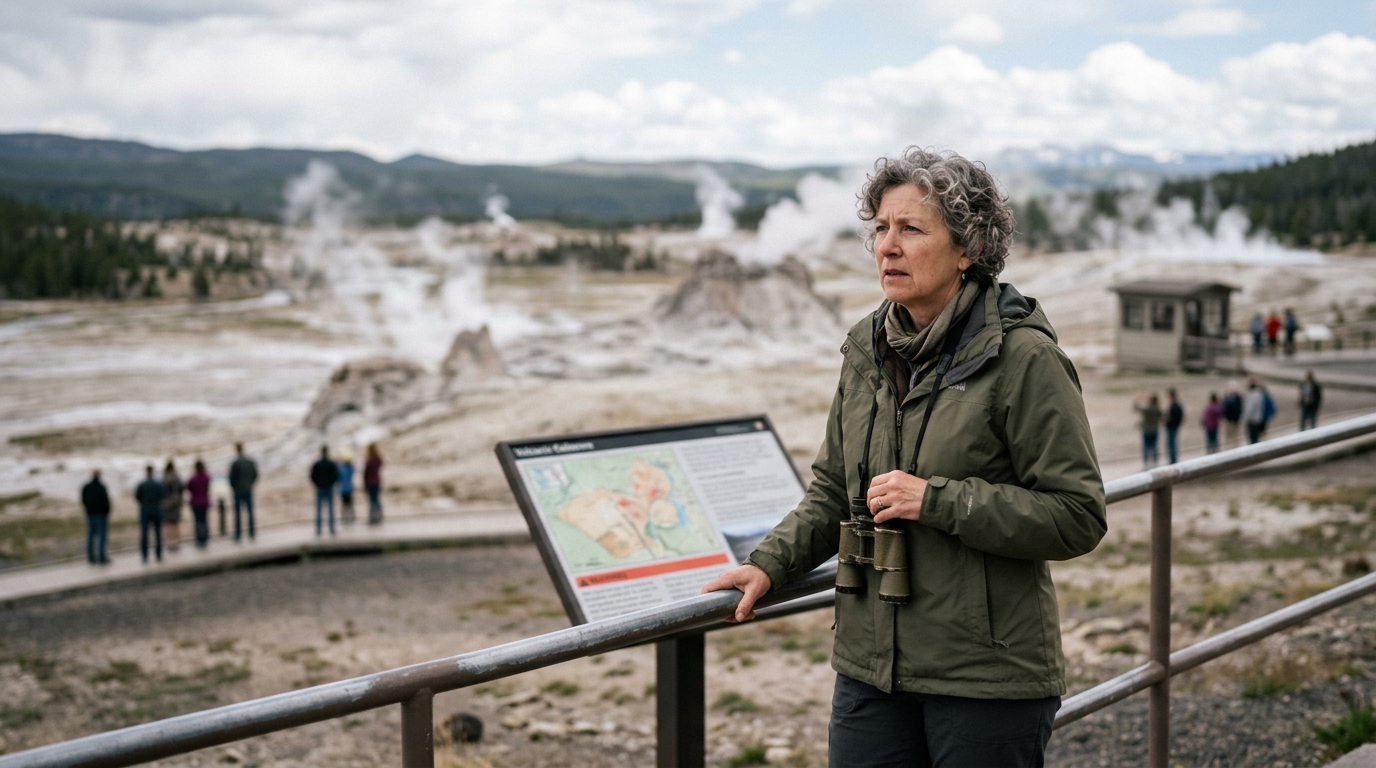
Here's my read on this: I think the crowd might be getting caught up in a bit of doomsaying, or perhaps overestimating the likelihood of truly rare events. When I look at the phrase "supervolcano erupt before 2050," my mind immediately goes to places like Yellowstone or Toba. These aren't your garden-variety eruptions. We're talking about events so massive they can alter global climate for years, causing a "volcanic winter." And the thing about these truly massive, VEI 8 eruptions is that they are incredibly, *incredibly* rare.
If you dig into geological history, you'll find that VEI 8 eruptions typically happen on timescales measured in tens of thousands of years. The last one, Toba, was roughly 74,000 years ago. Before that, Taupō in New Zealand blew about 26,500 years ago. We're talking about a human lifespan of a few decades versus a geological heartbeat spanning millennia. To put a 28% probability on such an event happening in the next two and a half decades – a tiny sliver of time in the grand scheme – feels, to me, like a significant overestimation.
So, why are people betting YES at 28%? I've been mulling this over, and I think there are a few factors at play. First, there's the "availability heuristic." When you hear about Yellowstone, it's often framed in dramatic, apocalyptic terms by documentaries and news segments. That kind of vivid, scary imagery can make the event feel more probable than it statistically is. Second, there's a general human tendency to overestimate low-probability, high-impact events – think lottery tickets, or plane crashes. The potential payout, both in terms of market winnings and the sheer novelty of being right about something so monumental, might be influencing some traders.
Then there's the long tail of risk. While the average interval between supervolcano eruptions is tens of thousands of years, geology isn't a perfect clock. There's always *some* chance, however infinitesimally small, that one could go off sooner. But 28%? That's not an outlier; that's almost a coin flip relative to what I'd expect for such a rare occurrence within this specific, relatively short timeframe. To put my money where my mouth is, I'd be leaning heavily into the NO side on this one, probably even buying up NO contracts if the price dipped much lower than 71%. I think there's a real opportunity for value here, betting against what seems to be an overly anxious crowd.
Ultimately, this market is a fascinating window into how we perceive risk, especially when it comes to low-probability, high-consequence events. It's a climate-weather market, yes, but it taps into something deeper about our anxieties about the planet and the future. I'll be watching this one closely as we get closer to 2050, but for now, my money's on the Earth taking a deep, long breath.