Will the US meet its climate goals?
When I first saw the odds on Kalshi for the question, "Will the US meet its climate goals?" by 2030, with a 'YES' priced at 22% and 'NO' at 77%, I honestly had to do a double-take. My immediate reaction was a mix of surprise and a bit of a contrarian itch. For those of you who might be new to how these prediction markets work, that 22% 'YES' means bettors are giving the US roughly a one-in-five chance of hitting its target – specifically, reducing greenhouse gas emissions by 50-52% below 2005 levels by the end of this decade. Conversely, the 77% 'NO' tells you the crowd is pretty convinced we're going to fall short.
I mean, seventy-seven percent feels like a strong declaration of failure, doesn't it? The market has seen a decent amount of action too, with 6,629 contracts traded and 2,271 contracts still open, which tells me people are definitely paying attention and putting their money where their mouths are on this one. It's not some obscure, illiquid corner of the platform; this is a market with conviction, and that conviction leans heavily towards missing the mark.
But here's what I'm grappling with: is that level of pessimism fully justified? I've been watching the climate policy space closely, and while achieving that 50-52% reduction is undeniably a massive undertaking, the trajectory isn't as bleak as 22% 'YES' implies to me. Think about it: as of 2022, the US had already cut its emissions by roughly 17% compared to 2005 levels. That's a solid chunk of progress, but yes, it still leaves a significant gap of another 33-35% reduction needed in just eight years.
Now, I know what many of you are thinking: "That's a huge lift, KalshiRadar!" And you're absolutely right. Historically, emissions reductions have been slower than desired. However, what I think the market might be underestimating is the accelerating impact of policy. The Inflation Reduction Act (IRA), for instance, is projected by various reputable analyses—like those from the Rhodium Group and Princeton's REPEAT project—to reduce US emissions by somewhere between 31% and 44% below 2005 levels by 2030. Even the lower end of that range, combined with the 17% we've already achieved, gets us very close to that 50% threshold. The higher end? Well, that would mean we're practically there.
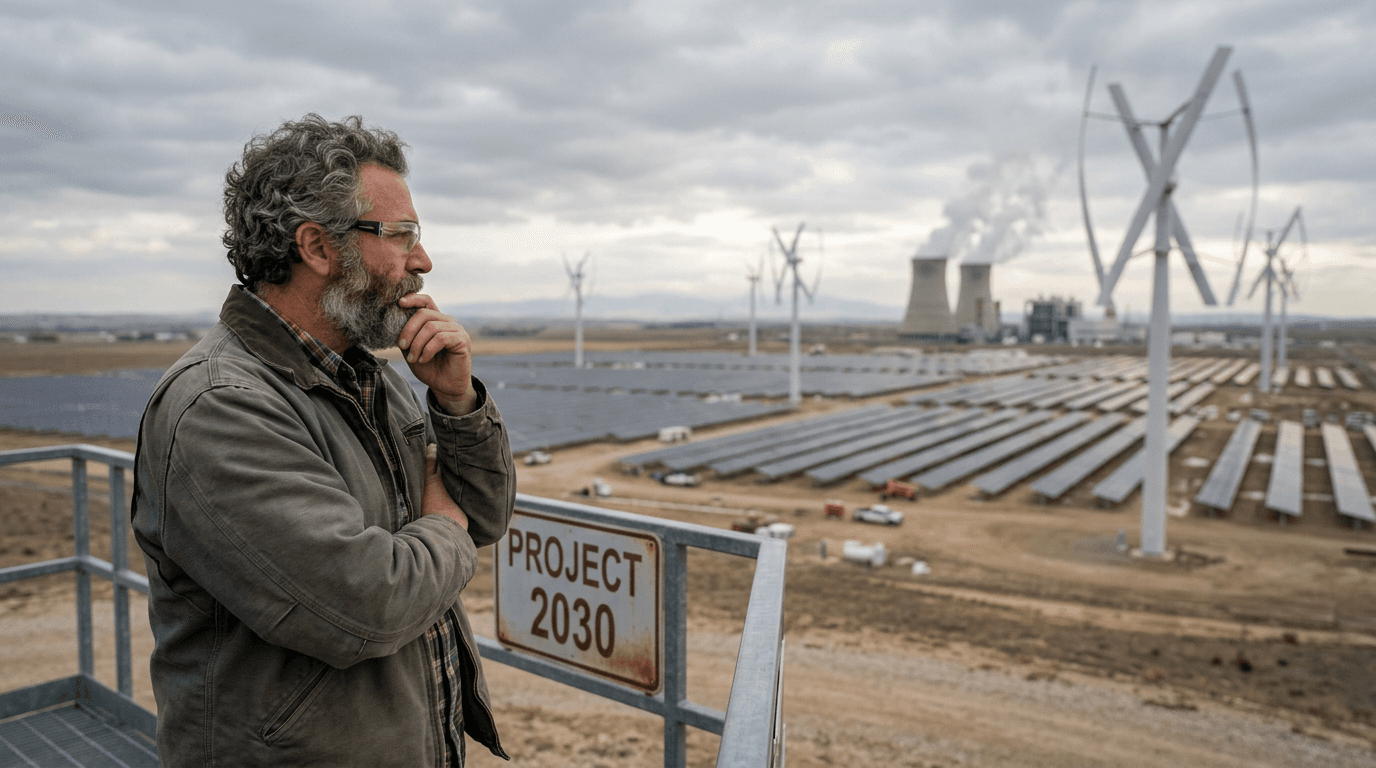
So, if the IRA alone can get us to the low-to-mid 40s (percent reduction from 2005 levels), then the remaining gap is perhaps only 6-9% in additional cuts. Can the US find that extra push through state-level initiatives, continued technological innovation, or even further federal action before 2030? I think it's more plausible than a 22% chance. I'm not saying it's a slam dunk; hitting the 52% upper bound might be a stretch, but hitting the 50% lower bound of the goal seems much more within reach than the market is pricing. We've seen an unprecedented surge in renewable energy deployment since the IRA passed, with solar and wind capacity additions breaking records year after year. The electrification of transportation and industry is also picking up steam.
My read on this is that the 77% 'NO' price is probably baking in a lot of political uncertainty, potential economic slowdowns, or perhaps just a general fatigue with climate progress. And those are valid concerns, I won't deny that. But I'm also seeing a significant amount of capital, both public and private, flowing into decarbonization efforts. The incentives are strong, and the technology is maturing rapidly. To me, the market feels like it's pricing in a straight-line extrapolation of past failures rather than fully accounting for the exponential potential of current policies and innovations.
If I were to place my money on this market right now, I'd seriously consider a 'YES' bet. At 22%, I see value. I think the market is underestimating the compounding effects of the IRA and the broader economic momentum towards clean energy. Even if we land at 48% or 49% below 2005 levels, the exact interpretation of "meet its climate goals" for a Kalshi market is usually very precise. But if it's about getting within striking distance, within the margin of error, or achieving the lower bound of the 50-52% range, then 22% feels too low for the probability of success. I believe the path to hitting that 50% target, while steep, has more tailwinds than the market is currently willing to acknowledge. It's a risk, sure, but one that I think offers a compelling payout given the current odds.